
Ferrari: The Luce at the End of the Tunnel
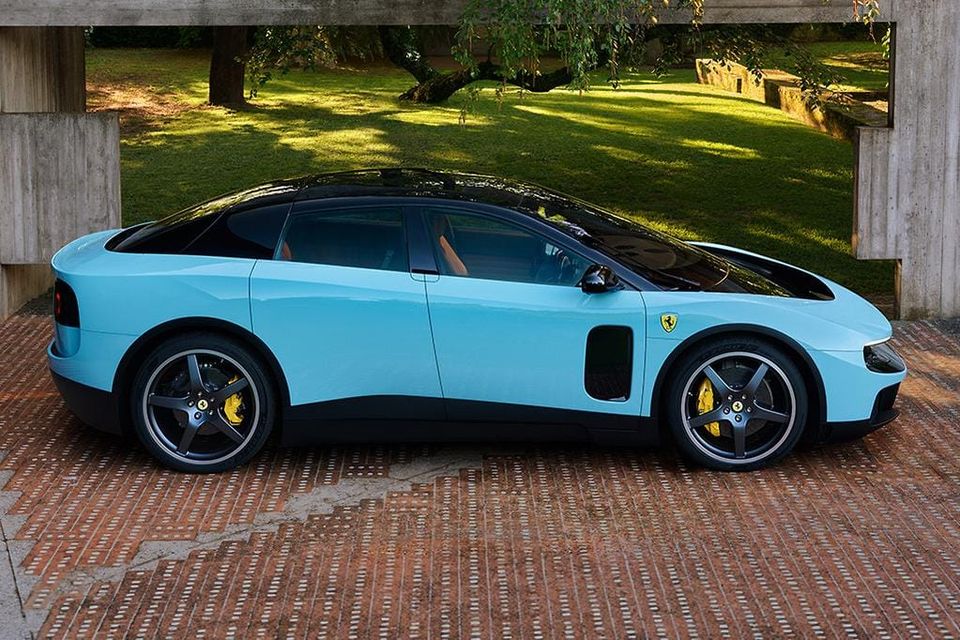
Ferrari ($RACE) is down ~11% YTD and ~31% in the past year. Today it fell a further 5.5% after unveiling the Luce, its first full EV, the stock is sitting near its 52-week low of $312.51.
The market has been selling Ferrari for eight months and is selling it again today for a new reason. The business has not changed, the order book extends to the end of 2027, the EBITDA margin is 39% and a buyback programme is currently ongoing.
So Why It Has Been Falling
The decline kicked off at the start of October 2025, with $RACE's single worst trading day, down 15-16%. Management guided 5% annualised revenue growth through 2030, a deceleration from 17% in 2023 and 12% in 2024. Additionally, they also reduced their EV mix target from 40% to 20% by 2030, with hybrids and petrol making up the remainder.
That interpretation misses how Ferrari operates, they limit production intentionally. It shipped 13,752 cars in 2024 and will ship a similar number this year. It does not scale by making more cars, it scales by making more expensive, more personalised cars to a fixed and carefully managed clientele. The revenue per car matters more than volume, a 5% revenue growth target on a business generating €7.5B annually with 39% EBITDA margins is not a slowdown in traditional terms. It is a deliberate choice by management to protect the brand by keeping supply scarce and pricing power intact.
Today's decline is due to a different fear, that the Luce, a four-door five-seater EV priced at €550,000/$640,000, represents a departure from Ferrari's identity that will alienate its customer base. Porsche and Lamborghini both scaled back EV programmes citing weak demand, Ferrari has opted to go in the other direction.
What The Business Actually Looks Like
Per the 6-K filed May 5th, Ferrari reported Q1 2026 net revenues of €1.848B, up 3% year-over-year or 6% stripping out currency movements. EBITDA €722M at a 39.1% margin, EBIT €548M at 29.7% margin, Industrial free cash flow €653M, Net profit €413M and EPS €2.33 versus €2.30 in Q1 2025. Total debt is €2.929B against cash of €1.857B, net debt of approximately €1.072B. Modest leverage for a business generating €1.5B in annual free cash flow.
Shipments declined slightly to 3,436 units from 3,593 (deliberately), Ferrari designed Q1 deliveries to be lower due to a planned model changeover. The Middle East conflict did not impact total delivery volumes, with Ferrari rerouting shipments via air freight and bringing forward deliveries to other regions. The US was the strongest performing single market in Q1, with 929 deliveries, a 7.9% increase year-over-year.
The F80, Ferrari's most powerful road car ever priced at €3.6M, was revealed in October 2024 and entered production ramp-up in Q1 2026, contributing directly to personalisation and margin growth in the quarterly results. All 799 units were sold out before the public reveal.
Personalisations accounted for approximately 20% of car sales revenue, these are customers paying above the standard specification to make their Ferrari their own. That is pricing power in its purest form, demand for customisation that no third party can replicate and no competitor is authorised to offer.
Ferrari confirmed full year 2026 guidance with net revenues of approximately €7.5B, adjusted EBITDA margin of at least 39%, adjusted EPS of at least €9.45, and industrial free cash flow of at least €1.5B. Management confirmed Q1 as in line with the full year trajectory.
The order book extends to the end of 2027, Ferrari cannot make cars quickly enough to satisfy demand. That is not a business with a demand problem, it's a business with a supply constraint, by design.
The Luce
The Luce is not a forced entry into EVs, Ferrari teamed up with Jony Ive, who designed the iPhone, MacBook Air, and Apple Watch. His involvement alone signals Ferrari is treating this as a genuine product, aimed at a specific market.
The Luce has over 1,000 HP powered by four electric motors, top speed of 193mph, a 500km range, five seats and is priced at €550,000. Deliveries start in Q4 2026, per the Q1 earnings call, order intake for the Luce was already described as strong ahead of today's reveal.
The purist backlash is real and predictable, this isn't new for Ferrari. When it launched the Purosangue SUV, the same criticism arrived, then it sold out before it reached showrooms and traded on the secondary market at significant premiums to retail. When Ferrari extends its range to a new format, the waiting list fills, this is a consistent pattern.
Lamborghini cancelled its first fully electric vehicle citing weak demand, but it's worth noting that Lamborghini's average selling price is approximately €250,000, less than half the Luce's price point. The buyer at €550,000 is not the same buyer and the demand sensitivity is not even comparable.
The Capital Allocation
Exor, the Agnelli family holding company, holds ~20% of Ferrari equity with ~30% of voting rights, Piero Ferrari holds a further 10.6% equity, combined they control ~48% of voting power. Exor sold approximately 4% in February 2025 to fund new acquisitions but committed to remaining Ferrari's largest shareholder in the long term. The shareholder agreement between Exor and Piero Ferrari was renewed in January 2026 through 2029.
Ferrari itself is actively repurchasing shares, with a €3.5B buyback programme in place through to 2030. Since January 5th 2026 Ferrari has repurchased 1,218,103 of its own shares across NYSE and Euronext Milan, deploying €357.5M through May 22nd. The second tranche of €250M was announced April 10th and is already over a third deployed.
The AGM also approved a dividend of €3.615 per share in April 2026, totalling ~€640M paid on May 5th. A business that can simultaneously pay €640M in dividends, repurchase €357.5M of its own shares, and run a €3.5B buyback programme through to 2030, is not how a troubled company allocates capital.
The Risks
US tariff exposure is a genuine near-term risk, the 6-K explicitly mentions US import tariffs as a partial headwind to Q1 operating profit. Ferrari's buyers are not price sensitive in the way mass market buyers are, historically the company has passed cost increases directly to customers, but sustained tariff escalation compresses margins before price adjustments can be made.
The Luce carries execution risk, Ferrari has never built a fully electric vehicle at scale. Battery technology, thermal characteristics, and the driving experience of an EV are different challenges to what Ferrari has spent 86 years perfecting. If the Luce underperforms technically, not just commercially, it creates a brand association the company cannot afford.
Currency is a structural headwind, $RACE reports in euros and generates significant US dollar revenue, FX headwinds of approximately €200M are already built in to the 2026 guidance.
My View
Ferrari has sold off ~31% in the past year on two separate fears: that 5% revenue growth makes it a value stock, and that a $640,000 EV designed by Jony Ive will alienate its customer base. Neither fear has been validated by the actual business, with the Luce order intake building before the car was even publicly revealed. The Luce argument confuses retail investor opinion with actual customer demand, people criticising the design on social media are not Ferrari's customers, the actual customers are on a waiting list extending out to 2027.
The 5% growth argument misunderstands Ferrari's business model, Ferrari is not trying to be Stellantis. It is more akin Hermès; growing revenue per unit rather than unit count, protecting brand value through scarcity, and compounding margins over time. On that basis 5% revenue growth with expanding margins and €1.5B in free cash flow is not a problem, it is just the model working as designed.
At approximately 20x forward EV/EBITDA, $RACE trades at the low end of its own five-year historical range of 25-35x, with a sold-out order book, 39% EBITDA margins, and €3.5B in committed buybacks through 2030. That is not where a structurally impaired business trades, but it is where a misunderstood one does.
I bought this morning at $332.43, with the aim to hold for at least 12 months, the Luce sell-off is exactly the type of dislocation this publication exists to identify.
Q2 2026 earnings on July 30th will provide additional information on the Luce order book,US delivery numbers, and any update on tariff cost pass-through/refunds. If management indicates the Luce order book is filling at the rate of prior model launches, the bear case collapses.
Ticker Thoughts is independent analysis. Current position: 40 shares at $332.43 average.