
Carnival Corporation: This is not COVID 2.0
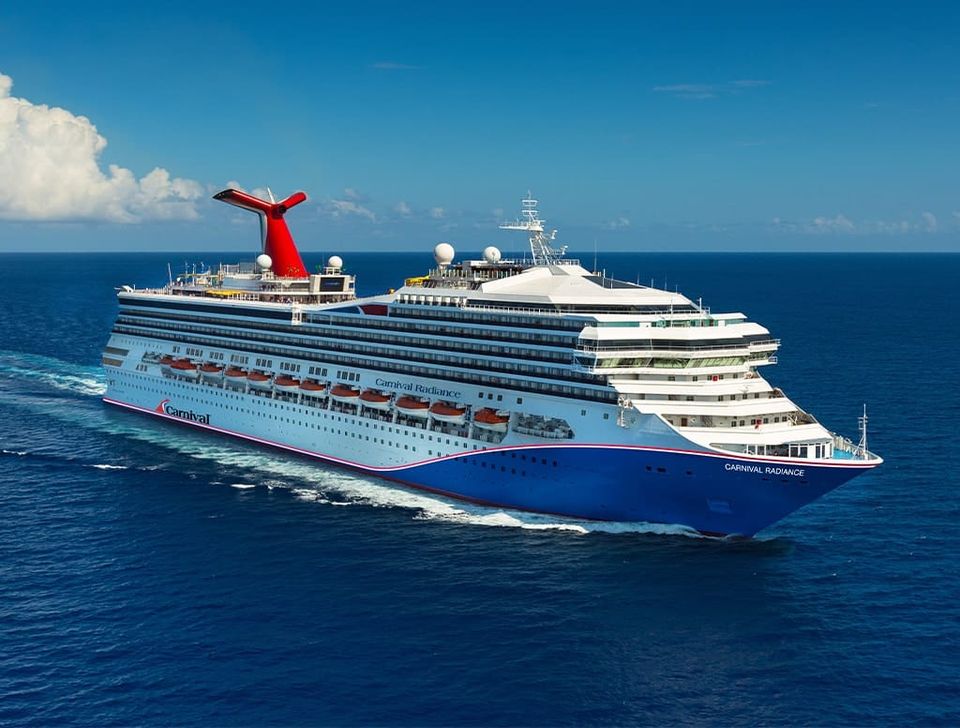
Carnival Corporation ($CCL) is the world's largest cruise company, operating nine major cruise lines: Carnival Cruise Line, Princess Cruises, Holland America Line, Cunard, P&O Cruises, Costa Cruises, AIDA Cruises and Seabourn. They carry over 3 million passengers per quarter across every major ocean market.
The stock sold off this month alongside Royal Caribbean and Norwegian following news that three passengers died aboard the MV Hondius from hantavirus. The market had a COVID flashback and the reaction was understandable given the amount of press it received, the logic behind it was not.
The MV Hondius is a small expedition ship operated by Oceanwide Expeditions. It is not a Carnival ship, not a Carnival brand, or affiliated with Carnival in any way. $CCL took collateral damage from a competitor's vessel on a route it doesn't sail. Meanwhile the underlying business just reported the strongest quarter in its history, and management is in the middle of a corporate restructuring that most news coverage hasn't properly addressed.
What Actually Matters
The hantavirus selloff is a mispricing: The Andes strain of hantavirus that killed three passengers on the MV Hondius is the only one among 38 known strains capable of person-to-person transmission. The WHO's assessment is that transmission occurred exclusively between very close, sustained contacts: married couples, cabin-sharers, people in prolonged physical proximity. The leading hypothesis from health authorities is that initial infection occurred on land before embarkation in South America, with limited onboard spread among close contacts thereafter. The WHO assessed global population risk as low and has not declared a public health emergency.
The MV Hondius is a 147-person expedition vessel that sailed to Antarctica, the Falklands, and South Georgia; remote wilderness environments where rodent exposure is a known risk. The ship is operated by Oceanwide Expeditions, not Carnival. Carnival does not run expedition voyages to Antarctica. Its 90+ ships carry over three million passengers per quarter through Caribbean, Mediterranean, and Alaska itineraries; environments with no comparable rodent exposure risk and no history of hantavirus transmission. The CDC has never classified hantavirus as a mainstream cruise industry risk.
The market sold the entire cruise sector on a headline. The actual risk to Carnival's operations is as close to zero as epidemiology allows. Bookings across the industry are holding and the sell-off has already partially recovered.
The financials are record-breaking: Per the Q1 2026 8-K and 10-Q filed March 27th, this is how the business is performing right now. Total revenues hit a Q1 record of $6.165B, up from $5.810B in Q1 2025. Operating income rose to $607M from $543M. Net income attributable to shareholders of $258M compared to a loss of $78 million in the same quarter last year. Adjusted EBITDA hit a Q1 record of $1.267B.
Bookings for 2026 are up double digits with nearly 85% of the year already on the books at historically high prices. Customer deposits (the most forward-looking demand signal in the cruise business) hit a Q1 record of nearly $8B, up 10% on the prior year's high. That is $8 billion of committed consumer spending sitting on Carnival's balance sheet before a single passenger boards.
One number that gets less attention than it deserves: fuel costs actually fell year-over-year from $465 million to $397 million despite higher Brent prices in the period. The reason is efficiency. Carnival measures fuel consumption per available lower berth day, the industry's standard capacity metric, calculated by multiplying passenger berths by revenue-producing ship operating days. On that measure, consumption fell 4.7% year-over-year, the result of ongoing investment in hull efficiency, optimised routing, and a newer fleet burning meaningfully less fuel per passenger than the ships they replaced. In an environment where unhedged fuel exposure is the primary near-term risk, a demonstrated ability to reduce consumption per unit of capacity is a meaningful offset.
PROPEL: management has put specific numbers on the table. Alongside Q1 results, Carnival introduced PROPEL: Powering Growth and Returns, Responsibly, a new set of long-term targets to be achieved by 2029. The targets are specific enough to be held accountable against: greater than 16% return on invested capital, more than 50% adjusted EPS growth from 2025 levels, approximately $14 billion distributed to shareholders through 2029, and a net debt to adjusted EBITDA ratio of 2.75x.
Net debt to adjusted EBITDA currently sits at approximately 3.3x. The PROPEL target of 2.75x by 2029 is management explicitly committing to a deleveraging path with a specific endpoint. For investors worried about the debt load (and they should be thinking about it), this is the response.
The credibility question is fair to ask. Management's answer is their previous target framework (SEA Change), which they surpassed in roughly half the expected time frame. ROIC more than doubled. Adjusted EBITDA per available lower berth day hit its highest level in nearly two decades. The buyback programme and reinstated dividend announced alongside PROPEL are consistent with a management team that believes the targets are achievable rather than aspirational.
The corporate restructuring just finished and most coverage missed it: Until May 7th 2026, Carnival operated under a dual-listed company structure that created an oddity most retail investors never noticed. There were effectively three traded instruments representing one economic enterprise. Carnival Corporation traded as $CCL on the NYSE. Carnival plc traded as $CCL on the LSE for UK shareholders. And Carnival plc's American Depositary Shares traded as $CUK on the NYSE for US investors who wanted exposure to the UK entity. Same underlying business, three separate instruments that regularly traded at different prices. At one point in 2022 CCL and CUK shares diverged by 7% despite representing equivalent economic ownership in the same company.
On May 7th that structure was eliminated entirely. Following an April 20th shareholder vote in favour of unification, the LSE listing was cancelled, CUK was suspended from NYSE trading, and every Carnival plc shareholder received one share of the new Carnival Corporation Ltd. on a one-for-one basis. Everything now trades under $CCL on the NYSE. The company also re-domiciled from Panama to Bermuda.
The practical implications are meaningful. A single global share price eliminates the pricing arbitrage that existed between instruments. Governance and regulatory reporting simplify significantly as previously they filed with both US and UK regulators as two separate listed entities. Index inclusion and institutional ownership are cleaner with one share class. Administrative costs fall. And the combined shareholder base that was previously split across three instruments is now in one place, which typically improves liquidity.
The Risks
Unhedged fuel exposure: This is the real risk and it's the one getting the least airtime. Carnival does not hedge its fuel prices. Per the 10-Q, full year 2026 fuel expense is projected at $2.15B. The Q1 guidance assumes Brent averaging $90 per barrel for the remainder of April and May, $85 for Q3, and $80 for Q4. With Brent currently elevated between $105-115 following the Iran conflict, every $10 per barrel above guidance costs Carnival approximately $160M in adjusted net income for the remainder of 2026. If the Iran situation keeps fuel elevated through Q3, the full year $3.07B adjusted net income guidance takes a meaningful hit. Peers who hedge fuel have a cost advantage in this environment. Carnival is fully exposed.
The debt load: Total debt stands at $25.3B as of February 28th. Against cash of $1.424B that is $23.9B in net debt. The 10-K is explicit that debt servicing requires significant ongoing cash generation and that inability to service debt or satisfy covenants would materially impact the business. Interest expense was $291M in Q1 alone, down from $377M in Q1 2025 as refinancing at better rates takes effect, but still a significant fixed cost.
The trajectory is important, long-term debt has fallen from $24.037B at November 30th 2025 to $23.788B at February 28th 2026, a $249M reduction in one quarter. Cash from operations in Q1 was $1.263B versus $925M in Q1 2025, up 37%. The deleveraging is working, but at $23.9B net debt it remains the most significant tail risk in the investment case.
Strait of Hormuz itinerary risk: One fifth of global oil supply moves through the Strait of Hormuz. Carnival operates itineraries through the Arabian Gulf, the 10-K specifically mentions the company redirected away from planned Arabian Gulf voyages in summer 2025 in response to geopolitical conditions. A sustained closure of the Strait would force itinerary changes across those routes, create passenger disruption, and add fuel cost volatility simultaneously. This is a low-probability but high-impact tail risk that sits on top of the fuel cost exposure already discussed.
My View
The hantavirus narrative is doing the work of a much bigger story, and the market hasn't separated them properly. Three passengers died on a competitor's expedition vessel. Carnival's actual business, as of its most recent filing is running record revenues, record customer deposits, record adjusted EBITDA, with bookings up double digits and a $2.5B buyback just initiated.
The debt load is real and the unhedged fuel exposure is a genuine near-term risk if the Iran conflict keeps Brent elevated. Neither changes the structural picture of a business that generated $1.263B in cash from operations in a single quarter and is actively deleveraging toward a specific 2.75x net debt to EBITDA target by 2029.
On management's ability to deliver, they surpassed their previous SEA Change framework in roughly half the expected time, more than doubling return on invested capital. PROPEL is the next chapter. The track record earns them some benefit of the doubt.
At current prices $CCL trades at 8.22x trailing EV/EBITDA, a 40% discount to Royal Caribbean at 13.78x, and 10% below its own 10-year median of 9.13x. The market leader in global cruising is trading at a discount to both its peer and its own history.
For me this is a buy here, sized appropriately. The next data point is Q2 2026 earnings on 30th June. I will be watching the fuel cost line specifically, any narrowing between guidance assumptions and actual Brent will either vindicate or pressure the full year outlook. The DLC unification is now complete, removing a structural complexity that was suppressing liquidity for years, whether that triggers a quick re-rating is still to be seen.
Ticker Thoughts is independent analysis. Current position held in $CCL is 500 shares at $23.84 average.