
The Wrong Tool for the Wrong Problem
Central banks have one lever at their disposal. When inflation rises they pull it, interest rates go up, borrowing becomes more expensive, demand is supposed to fall, prices are supposed to follow. It worked in the 1980s. It worked, imperfectly, in the early 2000s. The question I'm not seeing in the mainstream financial press is, whether it still works when the inflation isn't coming from where the model assumes.
What We Are Seeing
Inflation has proven stickier than almost every central bank projected. The Federal Reserve, the ECB, the Bank of England all spent 2022 and 2023 raising rates at a pace not seen in decades, declared partial victory when headline numbers fell, and are now watching a second wave develop with fewer tools and less public patience than the first.
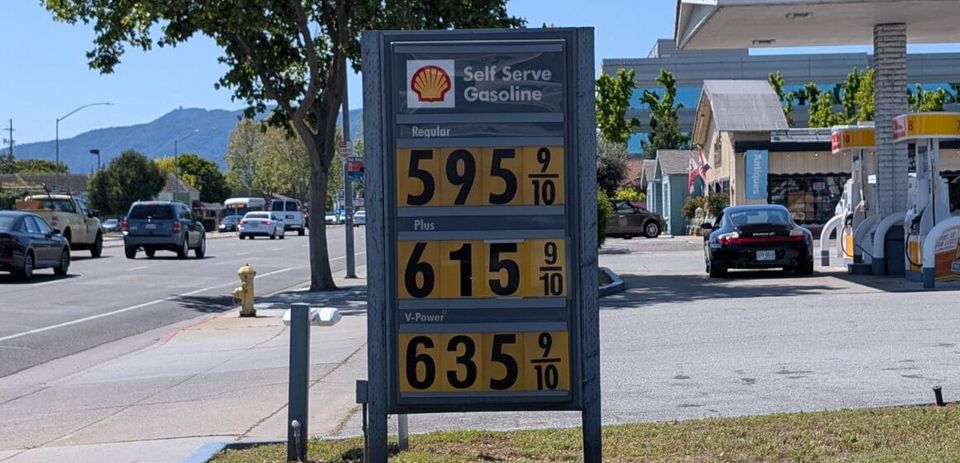
The April 2026 US CPI print shows inflation rose to 3.8% annually, the highest reading since May 2023, driven primarily by energy costs following the Iran conflict. Brent crude spiked from roughly $70 per barrel before the conflict began on February 28th to approximately $115 by end of April. Energy prices accounted for 40% of the month's total CPI increase. Gasoline is up 28.4% annually. Airline fares up 20.7%. For the first time in three years, Americans' wages are no longer outpacing inflation. Bank of America has pushed its Fed rate cut forecast to the second half of 2027 at the earliest.
Services inflation hasn't broken. Food prices remain elevated. Housing costs in most developed economies continue rising despite mortgage rates that should, in theory, be crushing demand. In Norway, Norges Bank held rates at 4.5% for eighteen months while underlying inflation remained stuck around 3%, still well above target, driven by food prices and services costs that barely responded to tighter monetary conditions. The same stickiness in services and food inflation is visible across the US, the EU and the UK.
Meanwhile several central banks are raising rates again or signalling they will. The lever is being pulled harder on a problem it was never fully designed to solve.
Why It Won't Work
Rate rises are a demand-side instrument. The underlying assumption is that inflation is caused by too much money chasing too few goods, so you make money more expensive, spending falls, and prices correct. That model works when the problem is overheated consumer demand or wage-price spirals.
It does not work when the inflation is structural and supply-side.
The Iran conflict is the clearest live example. No rate decision in the US caused Brent crude to spike 70% in two months, nor will any rate decision reopen the Strait of Hormuz, through which one fifth of the world's oil supply normally flows. Higher diesel prices increase the cost to transport every good delivered by truck. Fertilizer, produced using natural gas constrained by the conflict, threatens to raise costs for farmers. The International Energy Agency has predicted the conflict will keep global natural gas supplies tight for two years. These are supply shocks. Interest rates are demand tools.
The same logic applied before the Iran conflict. The inflation that emerged from 2021 onwards was not primarily driven by consumers spending recklessly. It was driven by supply chains that fractured during the COVID pandemic and have not fully recovered. The energy crisis triggered by the Russia-Ukraine war repriced gas and electricity across Europe in ways that fed into every cost of production. Mass layoffs in sectors that then struggled to rehire drove wage increases in services that have nothing to do with consumer credit conditions. Housing markets where the supply shortage is a decade in the making and a rate rise doesn't build a single additional home. Tariff-driven cost increases were already working through supply chains before the Iran conflict added another layer on top.
The data makes the failure concrete; The Fed raised rates from near zero to 5.25% between 2022 and 2023. In August 2023 its own economists projected that US shelter inflation would reach 0% growth by mid-2024. It didn't. Shelter inflation was still running at 5% annually in mid-2024 and 4% in mid-2025, years after the hiking cycle ended. Shelter makes up 32% of the US CPI basket. The central bank's primary tool had almost no effect on its single largest component.
Raising the cost of borrowing does not fix a broken supply chain, nor does it reopen a gas pipeline or build houses. What it does do is increase mortgage costs for every family with a variable rate loan, increase the cost of business borrowing for every company trying to invest its way out of a cost problem, and increase the interest burden on governments already carrying pandemic-era debt loads. The people the policy is nominally trying to protect, households struggling with the cost of living, are often the ones it hits hardest.
The bluntest way to put it: the tool was designed for a different economy, the world has changed and the playbook hasn't.
The Ratchet That Doesn't Reverse
Cocoa prices peaked at $10,412 per metric ton in December 2024, a 310% increase from pre-crisis levels, driven by consecutive poor harvests in West Africa. Chocolate manufacturers raised prices and, where they could, quietly reduced product sizes while keeping packaging the same. A German court recently ruled that Mondelez misled consumers by cutting Milka bars from 100 grams to 90 grams while simultaneously raising the price from €1.49 to €1.99. The Hamburg Consumer Protection Centre called it a "relative shrinkflation scam." Cocoa futures have since fallen back to around $4,220 per tonne. The Milka bar is still 90 grams and the price has not gone back to €1.49.
This is not a coincidence, it is now a feature of how corporate pricing works in an inflationary environment that shareholders have now been trained to expect.
What COVID did was give companies across almost every consumer category a legitimate reason to raise prices simultaneously. Consumers accepted it because the cause was visible and unavoidable. What happened next is that margins reset upward. Companies discovered that consumers were less price-sensitive than assumed, that competitors were raising prices in parallel so there was nowhere obvious to defect to, and that once a price increase is embedded it rarely reverses without a direct competitive threat or regulatory intervention.
Netflix introduced an ad-supported tier in November 2022 as a concession to cost-conscious subscribers, a lower price in exchange for watching advertisements. By January 2025 it had raised the price of that ad-supported tier anyway. The premium tier has seen multiple increases. Then the basic ad-free option was discontinued entirely. You now pay more, watch ads, and have fewer plan options than three years ago. The April 2026 US CPI data specifically cited video and audio services as a contributing factor to core inflation. Input costs for streaming, server infrastructure and content licensing, have not risen at anything close to the rate Netflix has passed on to subscribers.
Raising interest rates into this environment doesn't reverse the ratchet. For many companies it accelerates it, because higher borrowing costs become the next legitimate justification for another round of price increases. The mechanism that was supposed to reduce inflation hands corporations a new alibi to perpetuate it.
Who Does Benefit
If rates stay higher for longer while structural inflation persists, the question for investors isn't how to avoid the damage. It's where it creates opportunity.
Discount and value retailers.
When household budgets compress, spending patterns shift, not just to cheaper brands but to cheaper stores. Dollar General ($DG) and Dollar Tree ($DLTR) serve different demographics, rural and suburban respectively, but both benefit from the same trade-down dynamic. Costco ($COST) operates differently. Its membership model creates a recurring revenue base that holds through downturns, and consumers under pressure often join specifically to access cheaper fuel and bulk essentials. A 90%+ membership renewal rate regardless of economic conditions is the relevant data point, not the stock's valuation. B&M ($BME) plays the same role in the UK market. The trade-down effect is also sticky: consumers who shift to value retail during a squeeze don't fully revert when conditions improve.
Resale platforms.
eBay ($EBAY) benefits from both sides of the consumer cash crunch simultaneously. Sellers offload possessions to generate cash, Buyers seek secondhand alternatives to full-price retail. Platform volumes rise without any increase in new goods produced. This dynamic is underappreciated in how most analysts currently model eBay's growth trajectory.
Financials, banks and brokerages.
JPMorgan ($JPM) benefits directly from wider net interest margins as rates rise, the spread between what it pays depositors and what it charges borrowers expands. Charles Schwab ($SCHW) benefits through a different but equally direct mechanism: client cash balances swept into its bank subsidiary generate net interest revenue that expands almost one-for-one with rate increases. During the 2022-2023 rate surge, Schwab's net interest revenue more than doubled.
Insurance.
Insurers collect premiums upfront and invest the float while waiting to pay claims. Higher rates mean that float earns significantly more. Chubb ($CB) is the cleanest large-cap expression of this, a well-run globally diversified insurer with a float that performs better in every rate environment above zero. Allstate ($ALL) is the more US concentrated alternative.
Berkshire Hathaway ($BRK.B).
Berkshire's cash and short-term treasury position sits at over $330 billion. Higher rates for longer means that position generates meaningful returns just sitting there, a structural carry advantage that compounds while the market focuses on whatever Berkshire might buy next. Tighter credit conditions also tend to produce distressed acquisition opportunities that Berkshire is uniquely positioned to act on. It is one of the few large-cap equities where the higher-for-longer scenario is genuinely additive rather than neutral.
Short-duration fixed income.
Cash earns a real return again. For investors who want direct exposure to higher rates without equity risk, short-duration treasury ETFs like $SGOV or $BIL are the simplest solutions. Money market fund assets have hit record levels as retail investors realise they no longer have to take equity risk to generate a yield.
My Thoughts
The rate rise lever will keep being pulled because it is the only lever central banks have, but that doesn't mean it will work. The inflation that persists in services, food, and housing is structural; built from supply constraints, corporate pricing power, and a ratchet effect that monetary policy cannot reverse and may inadvertently accelerate. The Iran conflict has now layered a live supply shock on top of that structural problem which rate rises will not resolve.
The investment implication is not to position for a rapid return to 2% inflation and rate cuts. It's to position for a prolonged period where the cost of living stays elevated, household budgets stay compressed, and the businesses that benefit from constrained consumer spending outperform the ones that depend on it.
The Milka ruling in Germany is a small but interesting signal. Consumers are beginning to push back through courts and regulators rather than just switching brands. If that trend develops into actual legislative action on shrinkflation disclosures or windfall taxation, (both of which are being discussed in various European parliaments) the pricing power that has been protecting corporate margins starts to look more fragile than the last three years of earnings reports suggest.
Keep an eye on that space more than the next rate decision. The rate decision is predictable, what happens to corporate pricing power when regulators and consumers finally lose patience is not.
Ticker Thoughts is independent analysis. No positions held in the securities mentioned at time of publication.