
Sony: The Physical AI Play
$SONY is down ~15.5% YTD and ~18% in the past twelve months, the main headline from the March 31st 2026 fiscal year ending was a net loss of ¥326.9B (approx $2.04B).
The net loss is explained by a ¥1.377T ($8.6B) non-cash accounting charge from reclassifying the Financial Services spin-off, if you remove that, the business operations tell a completely different story. Operating income from the actual business grew 13.4% to ¥1.447T ($9.04B), the underlying net income was ¥1.030T ($6.43B), they also announced a ¥500B ($3.12B) buyback and raised the dividend 40%.
What Sony Actually Does
Most coverage frames Sony as a gaming and entertainment company that also makes consumer electronics, which would be incorrect by at least a decade.
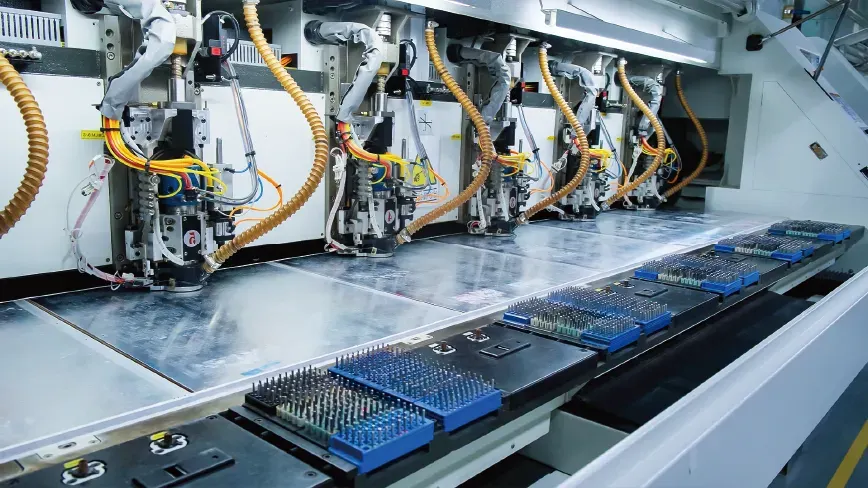
It is the dominant global supplier of Complementary Metal-Oxide-Semiconductors (CMOS) image sensors, the silicon chip inside every smartphone camera, autonomous vehicle, surgical robot, and drone that allows machines to view the world around them. Every application that requires machine vision requires an image sensor and Sony makes 63.6% of all of them, the critical infrastructure for the physical AI economy.
The business has five segments: Gaming and Network Services (PlayStation), Music, Pictures, Entertainment, Technology and Services (consumer electronics) and Imaging and Sensing Solutions (previously called the semiconductor division). This name change in 2019 caused the market to misclassify what Sony actually is.
The Five Businesses Segments
Sony has five segments, the market prices it as a games and electronics company with a troubled balance sheet. Here is what each segment actually looks like and what they do.
Gaming and Network Services (PlayStation): 65M+ PS5 consoles sold and in homes globally, more games being sold per console YoY and PlayStation Plus subscriptions growing steadily. On June 2nd Sony revealed Marvel's Wolverine gameplay, a new God of War title, and confirmed release dates for Control Resonant, Onimusha, Silent Hill Downfall, and Tomb Raider Legacy of Atlantis. Additionally, GTA VI due to launch November 2026 (allegedly), the most anticipated game this year, is expected to drive hardware upgrades and PlayStation Plus subscriber growth.
Music: Sony Music is the third largest music company in the world, with a catalogue including Michael Jackson, The Beatles, and thousands of other artists. Sony announced a joint venture with UK-based Roast Productions in June 2026 to expand into live theatre, concerts, and family events. In May 2026 they also entered into an agreement to acquire a music catalogue company outright, adding ~$1.9B in long-term debt to fund it. Sony is actively expanding the catalogue rather than just sitting on what it already owns.
Pictures: The Spider Man licensing agreement with Marvel means Sony collects fees every time Spider Man appears in an MCU film, with Spider-Man: Brand New Day releasing July 31st 2026 . They also holds Ghostbusters, Jumanji (Jumanji Open World releasing December 2026), and Crunchyroll (the world's largest anime streaming platform). Operating income fell 11% to ¥104.9B ($654M) for the segment in FY2026, but excluding a one-time impairment charge on a VFX acquisition, it actually rose 13%.
Entertainment, Technology and Services: Consumer electronics, cameras, and the BRAVIA professional display business. The TCL joint venture transferred TV hardware manufacturing to TCL (one of the world's largest TV manufacturers), while Sony retains the BRAVIA brand, the software layer, and the premium positioning. Sony collects brand licensing fees and software revenue without carrying the hardware manufacturing cost, the same move Apple made when it outsourced iPhone manufacturing to Foxconn.
Imaging and Sensing Solutions (I&SS): 63.6% global CMOS image sensor market share which is the fastest growing, highest-margin segment in the portfolio. This is the part of the business the rest of this article will cover.
The I&SS Numbers
Per the 6-K filed May 8th, the Imaging and Sensing Solutions segment reported sales of ¥2.151T ($13.42B), +20% YoY, with operating income of ¥357.3B ($2.22B), +37% YoY, both were record highs for the segment with operating margin at 16.6%, +2.1% YoY.
Sony's I&SS segment alone generates more revenue than ServiceNow's ($NOW) entire business, it is growing at 20% YoY with record margins and is Sony's fastest growing segment.
The growth comes from two places. Mobile sensors, with Sony supplying the cameras inside virtually every premium smartphone on the market including Apple and Samsung. And a deliberate push into automotive, medical, industrial and robotics where the performance requirements are higher and so are the margins.
On the automotive front, every modern car with automatic emergency braking, lane keeping or blind spot monitoring needs cameras to see the road and self-driving cars needs even more of them. Sony launched the IMX828 in October 2024, a sensor built specifically for car cameras, looking to grab a share of the fastest growing camera market in the world.
The robotics angle has the potential to be much larger. In April 2026 Sony published research showing its sensors tracking a tennis ball in real time at 225 frames per second. The same capability that tracks a fast-moving ball is what a robot arm needs to move with precision, every humanoid robot being built today needs sensors to see and Sony is at the forefront of that market.
The TSMC Partnership
Sony and TSMC already operate one joint venture: JASM (Japan Advanced Semiconductor Manufacturing), which started in 2021 for logic chip production. The May 8th 2026 memorandum of understanding (MOU) is a new partnership for next-generation image sensors, with Sony being the majority and controlling shareholder. The partnership would be located at Sony's newly constructed fab in Koshi City, Kumamoto, with Japanese government support of up to ¥60B ($375M).
The partnership is also part of Sony's stated 'fab-lite' strategy, reducing their own capital expenditure by sharing manufacturing with TSMC rather than building and funding everything in-house. Less capital tied up in factories means more available for sensor design, robotics research, and shareholder returns.
Sony's sensor advantage comes down to how they're built. The pixel layer and the processing layer are manufactured separately then bonded together, allowing them to pack more pixels into a smaller space and capture more light than competitors. Samsung and OmniVision have been trying to replicate this for a decade with neither matching it at scale.
TSMC makes the most advanced chips in the world and Sony designs the best image sensors in the world, this partnership would combine both. Sony's sensor design on TSMC's manufacturing process, targeting robotics and automotive, the two markets where sensor performance matters most and where demand is growing fastest.
Every autonomous vehicle needs between 8 to 12 cameras, next-generation robotics need vision and surgical system needs imaging. The addressable market for the sensors Sony is now building with TSMC does not yet fully exist at scale, the robotics deployment curve is still early. Tesla's Optimus has stated a target of producing millions of humanoid robots, with China following suit, all in need of sensors.
The Restructuring Noise
Three non-operational items distorted the fiscal year ended March 2026 headline numbers and created the entry point.
When Sony spun off its Financial Services business in October 2025, accounting rules required it to reclassify certain balance sheet items through the income statement, generating a ¥1.377T ($8.6B) non-cash loss that has nothing to do with how the business is performing. This does not affect total equity, cash flows, profit from continuing operations, or the dividend. It is purely a bookkeeping exercise, with the loss appearing on the income statement and is irrelevant to the actual day-to-day business.
An impairment charge of ~$765M related to the acquisition of the game developer (Bungie). Sony overpaid for Bungie and has written it down, this is a one-time event that does not affect PlayStation's underlying performance, or any of the other business segments.
Sony's partnership with Honda was discontinued in 2025 after Honda reduced its EV ambitions. Sony kept its involvement deliberately light with minimal capital committed and has already confirmed the financial impact would not be material.
The Capital Allocation Signal
Sony repurchased 70.79 million shares for ¥250B ($1.56B) between Nov 2025 to May 2026, with the board authorising a further ¥500B ($3.12B) for buybacks. Total committed buybacks of ¥750B ($4.86B) at current prices is ~3.6% of Sony's entire market cap.
Additionally, the dividend is being raised 40%, from ¥25 ($0.16) per share to ¥35 ($0.22) per share in FY2027.
In May 2026, Director Yoshida Kenichiro exercised stock options originally granted in 2022 and 2023 at $16.47 and $14.49 per share, then sold all 400,000 shares at $22.61, retaining 661,615 shares. Sony's CDO sold a further 17,500 shares, no named insider has made an open market purchase of stock in 2026.
The Moat
Sony's image sensor moat has three layers.
Manufacturing depth: Building image sensors at Sony's level requires specialised facilities, equipment and materials that take decades to develop and cannot be bought off a shelf or set-up overnight. The barriers are similar to those that protect ASML and TSMC in their respective markets. Sony has been refining its manufacturing process since 2012 and the TSMC partnership adds the world's most advanced chip fabrication capability on top of that existing foundation. A new competitor would need billions in capital and a decade of trial and error before getting close.
Customer lock-in: Apple qualifies Sony sensors into iPhone supply chains, re-qualification for a competing sensor takes 12-18 months and millions of dollars. Once Sony sensors are designed into a product platform they stay for the lifetime of that platform generation and the switching cost is high.
Market concentration: Sony has a 63.6% market share, Samsung and OmniVision combined have ~20%, the top three players control over 83% of the market. One of the few remaining competitors, SK Hynix, is actually pulling back from image sensors to focus on AI memory chips. The competitive field is shrinking at the exact moment demand is growing.
The Risks
The yen is the structural risk that cannot be dismissed, Sony reports in yen and generates significant dollar, euro, and regional revenue. A strengthening yen compresses reported profitability for NYSE investors regardless of underlying performance. FY2026 benefited from a weak yen, if that changes the reported dollar figures deteriorate even if the underlying business does not.
The TSMC partnership is non-binding, an MOU is an intention not a contract. The definitive agreements have not been executed and the financial terms have not been disclosed, the strategic direction is clear but the timeline and scope are still to be confirmed.
PS5 hardware margins are under pressure due to rising memory prices driven by AI infrastructure spending and now represent over 35% of PS5 material costs. Due to this, Sony raised PS5 prices by $100 across the US in April 2026, with a second round of increases hitting global markets in May. During the May 8th earnings call the CEO confirmed Sony has no current plan for further increases, with PS5 hardware profitability expected to be maintained through 2026.
The smartphone sensor plateau, management guided that smartphone sensor growth may fluctuate as the trend toward larger-sized sensors begins to plateau. The growth from smartphone volumes is now maturing, whereas the growth from automotive and robotics is early-stage. There is a transition period where the plateau of one market precedes the ramp of the other.
My View
Sony has traded at 20-23x earnings through late 2025, now it trades at ~16.58x forward earnings. This is a 25-30% discount to where it was trading six months ago on a business that is growing faster, buying back more stock, and getting ready for the next generation of its most strategically important product line. FY2027 guidance calls for total operating income of ¥1.6T ($9.98B), +10.5% YoY, on sales of ¥12.3T ($76.73B).
For me this is a buy, with my current position being 1,100 shares at $22.09 average. The headline loss is a bookkeeping entry, the I&SS business is a decade-long structural story, and the market hasn't looked past the first line of the income statement yet.
Q1 FY2027 results covering the quarter ending June 30th 2026 will provide more details on the I&SS segment sales growth and operating margin, an update on the TSMC timeline moving from MOU to contracted agreement and GTA VI pre-order data for the catalyst to their gaming segment in November.
Ticker Thoughts is independent analysis. Current position: 1,100 shares at $22.09 average. All open and closed positions are detailed on the positions page.